
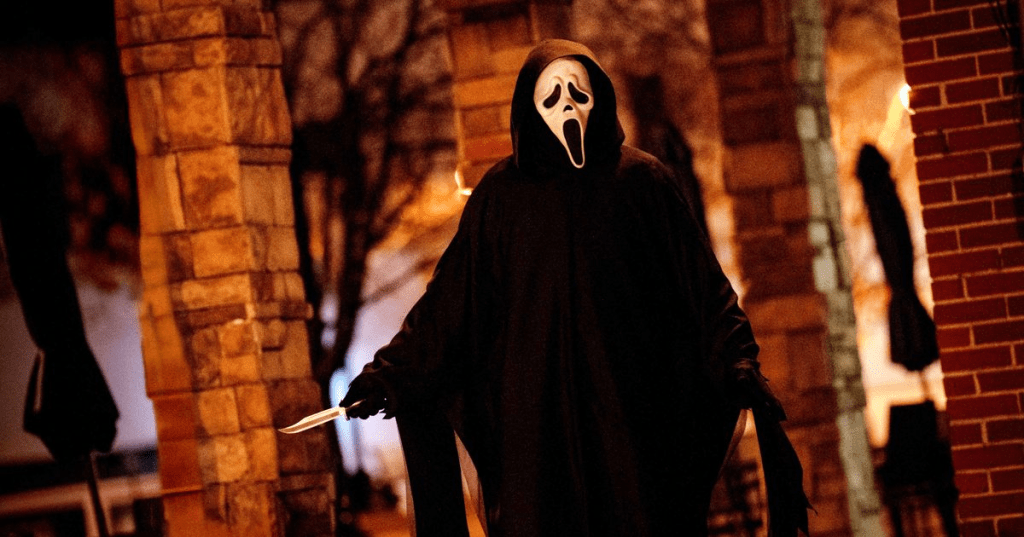
The Scream movies were never meant to go on for this long. The franchise started out satirizing teen slasher films, many infamously known for going on for far too long. (Something the Scream movies have never really commented on.) The well arguably ran dry by the third film, and the fifth and sixth movies being as good as they were really only achieved that through the talents of Radio Silence.
Now, Kevin Williamson is in the director’s seat, but given that he’s only been a film director once before — and that film was a teen comedy and not a horror — following up Scream 6 feels out of his element here. After all, Scream 6 was set in New York City, and had arguably the most ambitious set pieces out of all the Scream films. How do you top a predecessor like that?
Well, by doubling down on nostalgia, apparently. From Sidney’s daughter being named Tatum to Matthew Lillard returning as Stu Macher, Scream 7 is probably the most nostalgia-heavy out of all the Scream films, straight-up to how it uses the first film’s font for its title screen and end credits. Not just that, but this film really expects you to have done your homework before watching. Unless you’ve seen every entry that came before (and remember them well), you aren’t going to get many of the references.
It reeks of desperation, of clinging onto fan service because they have nothing else to cling onto. As memorable as Stu Macher was in the first film, there was a reason why he wasn’t mentioned all that much in the sequels. He was Billy’s sidekick, and his only reason for being Ghostface was that he was bored.
The Scream films have always made decisions that tested your suspension of disbelief (Scream 3’s voice changer, anyone?), but making Stu possibly alive is seriously pushing it. You’re telling me, after 30 years of intermittent Ghostface attacks, this is the only time the possibility of Stu not being dead was ever brought up?
More than that, though, every unbelievable element of the previous Scream films were at least there to aid their stories and make for fun, if ridiculous, twists. They were inspired ideas. Stu’s presence in Scream 7 feels like it’s there because of Matthew Lillard’s recent internet fame, and every other nostalgic element feels like it’s there for the purpose of fan service, for there to be something other than the return of Sidney to prevent this from being a throwaway entry.
Ironically enough, all the nostalgia baiting ends up being why Scream 7 is such a throwaway entry. This feels less like a cinematic release and more like a bonus epilogue for only diehard fans that should’ve been an hour long and released straight-to-DVD, or, I guess, straight-to-streaming these days.
After all, most of the new elements certainly don’t offer anything substantial. The new characters are hollow and forgettable, the new town setting just feels like Woodsboro 2.0 (as well as Haddonfield from Halloween), and the kills are so devoid of thrill and suspense, Williamson overcompensates by making them gory in ways Scream was never really known for. Was I watching a Scream film, or a toned-down version of Eli Roth’s Thanksgiving?
This movie really makes you appreciate how talented Matt Bettinelli-Olpin and Tyler Gillett are as directors. Whatever problems you may have with Scream 5 and 6, the two knew how to choreograph and make a chase and kill scene come alive. Williamson’s chase and kill scenes are as lifeless as they come. The camera is motionless, the shots are flat and claustrophobic, and the directing overall just comes across as amateur. I would’ve thought this was an indie film with a smaller budget had I not known better.
Of course, I did say most of the new elements instead of all. Though few and far between, there are some good ideas here. On paper, some of these scenes should work. Williamson is an iconic slasher writer, after all. One third-act scene, in particular, should’ve ranked among the highest points of the entire franchise. Whatever flavor these scenes should’ve had, though, is watered down because of the invisible atmosphere and lackluster direction. When it comes to film language, especially the language of horror films, Williamson seems disappointingly ineloquent.
The strangest thing, though, is that for a film so adamant about calling back 1996’s Scream, a slasher film iconic for being one of the most meta titles in the genre, Scream 7 feels uncharacteristically uninterested in making meta commentary of any substance. The few that do exist are there out of obligation, as Mindy and Chad from the previous two films have truly nothing to do in this one other than to do their Randy schtick, a schtick so tacked on that they both start giving out Ghostface alibis for characters they’ve only met five seconds ago.
But the Scream films that do work do so because they’re also just great slasher films, even without the meta moments. Scream 7, however, feels so much smaller than any of the other films, so much less substantial, a serious step back from all the other entries. While I’ve yet to decide if it’s actually worse than Scream 3 or 4, it certainly feels lesser than either of them. The movie isn’t even all that funny, another uncharacteristic decision for a franchise known for being a horror comedy.
By the end, I was left with the feeling that I hadn’t really watched a real sequel, but rather, an optional entry that only exists for the joy of references.




 Time Machine Geek
Leave a comment