

It’s been quite the past few days for Disney, hasn’t it? The Moana 2 trailer finally dropped, Win or Lose got a teaser, Incredibles 3 was confirmed, and a new original Pixar film, Hoppers, was announced. While I was glad to hear about Win or Lose and Hoppers, the news about Incredibles 3 only made me sigh. I probably would’ve had a stronger reaction had this announcement come much sooner, but given Inside Out 2’s success, maybe sequels are a necessary evil for titles like Elio and Hoppers to exist.
When Disney started announcing all their planned animated sequels, I couldn’t resist rolling my eyes. Zootopia 2 was the only one I was looking forward to, but Frozen 3 and 4, Inside Out 2, Toy Story 5, Moana 2, and Mufasa: The Lion King (yes, that’s animated) only had me shaking my head in disappointment.
I was, after all, a kid during a previous era where Disney was also obsessed with churning out cash-grab animated sequels, but in the form of straight-to-DVD releases instead. You’re probably well aware of this era as well, where sequels like The Little Mermaid II and Cinderella II: Dreams Come True typically repeated the same story as the original but with the protagonist’s kid instead, or stitched three unrelated segments together that were really just episodes of an unreleased TV show.
These straight-to-DVD sequels were what I immediately thought of when Disney announced they were turning the Moana show into a film, especially since this announcement came shortly after Wish’s failure at the box office. It just seemed like Disney was setting itself up for yet another period of creative bankruptcy. However, it’s not hard to understand why Disney’s going this route.
Movies are, after all, ultimately a business, and Disney animated movies have been seriously faltering at the box office ever since the reopening of theaters. Encanto only found success after its Disney+ release, Strange World, Lightyear, and Wish were all bombs, and while Elemental eventually became a sleeper hit, Disney movies are far too expensive to rely on becoming sleeper hits to have to see a profit.
With budgets like Strange World’s $180 million and Lightyear’s $200 million, these titles have to be instant money-makers for Disney and Pixar to continue making films with their animation quality.

And it’s not like other big animation studios don’t consistently rely on sequels for big box office numbers either. Just this year, DreamWorks released Kung Fu Panda 4 and Illumination Despicable Me 4, and follow-ups like Shrek 5 and Sing 3 are currently in production.
Still, sequels are what we expect from both of these studios. Sequels are a huge part of their identity — it’s hard to imagine either studio without them. Their sequels are usually released three or four years after the first film, so it’s almost more surprising if they don’t release a sequel after one of their movies becomes a big hit.
It took Disney until 1990 to release their first-ever animated sequel, The Rescuers Down Under. That’s 66 years and 28 films without a single sequel from their animated studio. Walt Disney himself was even against sequels, having said in 1966, “By nature, I’m an experimenter. To this day, I don’t believe in sequels. I can’t follow popular cycles. I have to move on to new things.”
Pixar, on the other hand, released their first sequel, Toy Story 2, in 1999. Then, they spent the entirety of the 2000s (their golden era) releasing nothing but critically praised originals, arguably save for Cars. For both Pixar and Walt Disney Animation Studios, sequels just aren’t what we associate these studios with, as even the aforementioned direct-to-DVD sequels were made by a different studio, Disneytoon.
Also, we expect a little better from Disney and Pixar than we do with Dreamworks and Illumination. Nobody’s surprised when those latter studios release a bad film as they’ve had plenty, but Disney and Pixar have built their fame on consistently releasing well-written and well-animated films, with a few missteps here and there. It certainly hasn’t bypassed a lot of us that Pixar only started returning to sequels after Toy Story 3 grossed more than a billion dollars, or that nearly all of their sequels are follow-ups to films released a decade or more prior.
Still, these sequels make money, do they not?
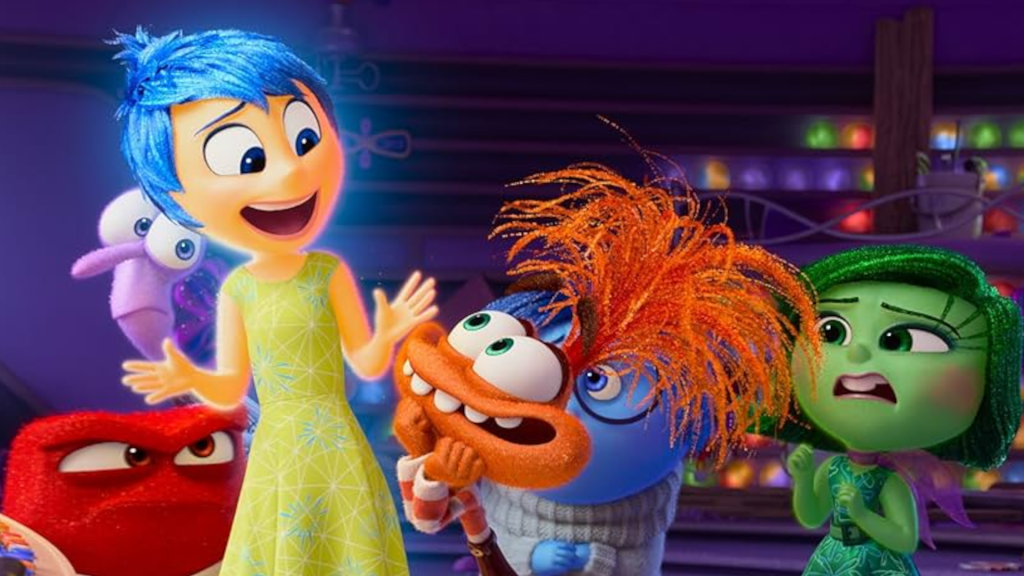
Finding Dory, Frozen 2, Incredibles 2, Toy Story 4, and most recently, Inside Out 2 have all made more than a billion dollars at the box office. Inside Out 2 is so close to being the highest-grossing animated film of all time, and given that it’s still in cinemas, it beating The Lion King’s gross seems inevitable.
They all boast great scores on Rotten Tomatoes, too, save for Frozen 2, and even that film still got a Certified Fresh rating of 77%. I’m not a fan of any of the above titles, and there are quite a lot that feel a similar way, but both critics and the general public enjoy these movies just fine.
The naysayers are a loud minority, but there’s still ultimately a minority. Most cinema-goers will eagerly pay for an admission ticket to all these upcoming sequels, as proved by Inside Out 2’s significant success after a string of Disney and Pixar financial disappointments.
Which begs the question: Why weren’t cinemagoers eager to see these financial disappointments?
It’s complicated.
The easy answer would be to blame bad reviews, but if Rotten Tomatoes really had an influence that massive, Dungeons & Dragons: Honor Among Thieves and Are You There God? It’s Me, Margaret shouldn’t have underperformed so much given their respective scores of 91% and 99%.
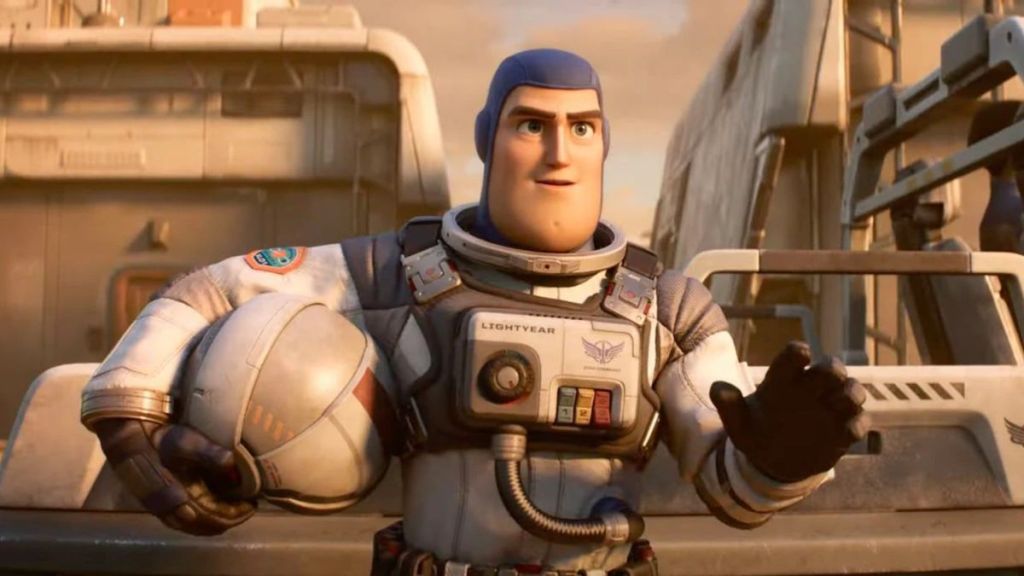
Not to mention, Lightyear received a Tomatometer score of 74%, Strange World a score of 72%, and Elemental a score of 73%. While these aren’t Disney’s and Pixar’s usual numbers of 85% and above, they’re far from rotten ratings, so “bad reviews” almost feels like a stretch. And many animated movies with similar or even lower scores have made bank with their theatrical releases, including ones made by Disney and Pixar.
Findings seem to agree with me, too. A study in 2017 showed “no positive or negative correlation between Rotten Tomatoes scores and box office,” while a 2020 The Ringer article found more nuanced results, writing, “The truth likely lies in the middle: Rotten Tomatoes wasn’t tanking the industry […] but it wasn’t irrelevant, either.”
Of course, both these studies drew data from movies released before the pandemic. It’s more likely, then, that many people’s movie-watching habits have changed after 2020, especially with the numerous streaming services currently available. A movie has to be an event to be worth paying cinema money for, and these new original films are going to be released on streaming soon, anyway, which they’re already paying for.
You could argue that these people were never that big of cinephiles to begin with, but that’s irrelevant — a casual film fan’s money is just as good as a film nerd’s. There’s also Strange World’s lack of marketing, Lightyear’s lack of connection to the Toy Story films, and Wish’s polarizing animation to consider, but the bottom line is that anything that isn’t a direct sequel is simply too much of a risk to theatrically release in a post-pandemic setting. There’s just too much money involved and too many things that can go wrong.
Sequels, by their nature, already have brand name recognition to rely on. That isn’t always an instant guarantee for success, but it’s certainly not nothing.
So, I surrender. If Disney needs to sequel their way to getting the general public to care about their original properties again, then so be it. These sequels have the possibility of being good, anyway, and even if I end up disliking them, I still have many new original movies to look forward to. Dreamwork’s The Wild Robot and Laika’s Wildwood both look very promising, and despite them both being based on books, they’re still new cinematic properties. (Also, The Wild Robot is one of my absolute favorite books.)
In the meantime, one can only hope these upcoming Disney sequels find a nice balance between the goal of making money and the goal of telling a good story. After all, that’s what made Disney and Pixar such household studio names to begin with.


 Time Machine Geek
Leave a comment